Summary

Protein-forward foods are in high demand today, including plant-based alternatives, sports nutrition, and functional foods, making protein quality just as critical as protein quantity.
To substantiate nutritional claims and comply with FDA labeling requirements, food and ingredient companies rely on food testing services such as Protein Digestibility Corrected Amino Acid Score (PDCAAS).
What is PDCAAS?
PDCAAS is the globally recognized industry standard for evaluating protein quality based on the essential amino acid requirements of humans and the digestibility of the protein source. It provides a standardized score (ranging from 0.0 to 1.0) used to calculate the Percent Daily Value (%DV) required for nutrition facts panels under the US FDA regulation 21 CFR 101.9.
Why PDCAAS Matters for Product Teams
- Regulatory Compliance: PDCAAS testing is mandatory for any product making a "High Protein" or "Source of Protein" claim on its packaging.
- Risk Mitigation: Protein quality is not static. Sourcing changes, processing conditions, such as extrusion or high heat, and ingredient substitutions can significantly alter a product's PDCAAS, potentially invalidating existing label claims.
- Cost Efficiency: While in-vivo (animal) testing is the regulatory gold standard, in-vitro (animal-free) testing serves as a critical, cost-effective screening tool. Using in vitro testing during R&D allows brands to optimize formulations and reduce the risk of falling short of the substantiation thresholds required during expensive final validation studies.
The Bottom Line
Leveraging PDCAAS data early in the product lifecycle ensures brand credibility, protects against regulatory scrutiny, and accelerates speed-to-market for high-performance food products.
Introduction: The Strategic Importance of PDCAAS Protein Quality Testing
Protein quality testing has become a foundational component of food and ingredient development, nutrition labeling, and regulatory compliance. As protein-forward products continue to expand across categories such as alternative proteins, medical nutrition, and fortified consumer goods, food companies are increasingly expected to substantiate not only how much protein is present in a product, but the nutritional quality, consistency, and reliability of that protein over time.
Protein quality is no longer a narrow technical concern limited to lab teams. It influences formulation decisions, labeling strategies, supplier selection, risk management, regulatory exposure, and long-term brand credibility. In many organizations, protein quality data now sits at the intersection of science, compliance, operations, and commercial strategy.
One of the most widely referenced methods for evaluating protein quality is PDCAAS, which stands for Protein Digestibility Corrected Amino Acid Score. While PDCAAS is frequently cited in academic research, regulatory guidance, and labeling discussions, it is often oversimplified or applied without sufficient context. Misuse or overreliance on PDCAAS can lead to flawed assumptions, while thoughtful application can support confident, defensible decision-making for ingredient selection.
What Is PDCAAS Protein Quality Testing?
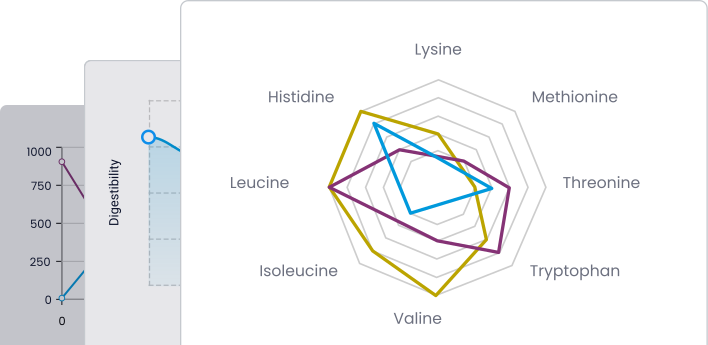
PDCAAS is a method used to evaluate protein quality based on two primary components: amino acid composition and protein digestibility.
- The first component evaluates whether a protein contains the essential amino acids required for human nutrition and whether those amino acids are present in sufficient proportions. Essential amino acids cannot be synthesized by the human body and must be obtained through diet. If a protein lacks one or more essential amino acids, or contains them in limiting amounts, its nutritional value may be reduced regardless of total protein content.
- The second component of PDCAAS accounts for digestibility. Digestibility reflects how efficiently a protein can be broken down during digestion and how effectively amino acids are absorbed and made available for physiological use. A protein with a favorable amino acid profile but poor digestibility may deliver less nutritional benefit than expected.
PDCAAS integrates these two dimensions by comparing a protein’s amino acid profile to a reference amino acid pattern based on human nutritional requirements, then adjusting that comparison using a digestibility factor. The resulting PDCAAS value provides a standardized way to compare protein sources on a relative basis.
Historically, PDCAAS has been used in nutrition research, regulatory contexts, and product development to evaluate protein quality in both finished foods and raw ingredients. While newer methodologies continue to be discussed, PDCAAS remains a widely recognized benchmark in many regulatory and commercial environments.
What Does PDCAAS Measure
Understanding the scope of PDCAAS is essential for applying it correctly and avoiding misinterpretation.
| PDCAAS Evaluates (Quality) | PDCAAS Does NOT Evaluate |
| Essential Amino Acid Profile: The presence and relative proportions of amino acids. | Quantitative Protein Mass: The actual grams of protein per serving in the final product. |
| Protein Digestibility: How effectively amino acids are absorbed under defined testing conditions. | Protein Functionality: How the ingredient performs in a formula (e.g., solubility or foaming). |
| Nutritional Reference Comparison: How the protein aligns with a standardized human reference pattern. | Sensory Attributes: Taste, texture, mouthfeel, or other organoleptic properties. |
| Claim Substantiation Potential: The corrected protein value needed to calculate %DV. | Metabolic Outcomes: Long-term health effects or specific physiological health results. |
Note: While PDCAAS measures quality, it must be paired with a Dumas Nitrogen test to determine the total protein grams required for your Nutrition Facts label.
PDCAAS should not be interpreted as a comprehensive measure of protein performance. Instead, it is best used as one component within a broader protein quality assessment strategy that includes complementary tests, contextual interpretation, and an understanding of product-specific goals.
How PDCAAS and Protein Quality Data Are Applied Across R&D, QA, and Regulatory Teams
While PDCAAS protein quality testing supports a common set of decisions, how the data is applied varies across functional teams within an organization. The same protein quality results may inform different actions depending on role and responsibility.
Across organizations, protein quality data is commonly applied as follows:
- Research and development teams use PDCAAS and amino acid data to guide formulation decisions, evaluate protein ingredients, and understand nutritional tradeoffs early in development.
- Quality and operations teams rely on protein quality testing to monitor consistency across suppliers, raw material lots, and production runs, helping identify variability over time.
- Regulatory and labeling teams use PDCAAS and amino acid profiles to support protein claims, maintain compliance documentation, and manage regulatory risk during audits or formulation changes.
Aligning interpretation of PDCAAS protein quality testing across R&D, QA, and regulatory teams helps ensure results are applied consistently and effectively. This alignment reduces downstream risk, supports regulatory confidence, and enables clearer, more defensible decision-making as products move from development through commercialization.
Regulatory and Labeling Considerations for Protein Quality
Protein quality testing plays an increasingly important role in regulatory compliance and nutrition labeling, particularly when protein claims are central to product positioning.
Regulatory scrutiny evaluates whether claims are supported by defensible data, whether results are reproducible, and whether documentation demonstrates consistency over time and across production conditions.
Protein quality testing supports regulatory and labeling needs by:
- Substantiating protein-related labeling claims
- Demonstrating consistency across batches and production runs
- Supporting documentation during audits, inquiries, or inspections
- Aligning formulation changes with labeling requirements
In practice, regulatory expectations tend to focus on patterns rather than isolated data points. Variability in protein quality across time, suppliers, or formulations can introduce compliance risk even when individual test results appear acceptable.
PDCAAS and the FDA Labeling Requirement 21 CFR 101.9
PDCAAS is a legal requirement for certain label claims such as high protein. In the United States, the FDA (under 21 CFR 101.9) mandates the use of PDCAAS to calculate the %DV for protein in specific cases.
The Role of PDCAAS in %DV Calculation
While a lab can tell you a product has 20g of Protein, the FDA requires that the Nutrition Facts panel reflects how much of that protein the human body can actually use.
The formula for calculating the %DV is:

When is PDCAAS Testing Mandatory?

Protein Claims:
If your packaging makes a claim like "High in Protein," "Excellent Source of Protein," or "Contains 10g of Protein," you must use the PDCAAS method to determine the corrected amount for the %DV column.

Products for Children:
For foods intended for infants or children under four years of age, the inclusion of the %DV is mandatory, making PDCAAS required.

Voluntary Disclosure:
Even if you don't make a claim, many retailers and "clean label" brands choose to show the %DV to provide full transparency to the consumer.
Regulatory Note: While Medallion Labs' in vitro PDCAAS is a powerful tool for estimating these values during formulation, the FDA currently recognizes in vivo (rat) studies as the gold standard for final label substantiation. Our in vitro method is designed to provide the data-backed confidence you need to ensure your final in-vivo study meets its target substantiation goals.
Benefits of Ongoing Protein Quality Testing
Protein quality is not static over a product’s lifecycle. Variability may be introduced through ingredient sourcing changes, supplier differences, processing adjustments, or reformulation efforts, even when formulations appear unchanged on paper.
Ongoing protein quality testing helps companies monitor how protein quality behaves over time rather than relying on single validation results. Repeat testing supports early identification of gradual shifts in amino acid composition or digestibility that may affect labeling documentation, regulatory alignment, or internal quality benchmarks.
Rather than serving as a standalone requirement, ongoing testing functions as a risk management tool, providing visibility into trends that can inform corrective action before a costly in vivo test.
5 Stages of Food and Ingredient Development When Protein Quality Testing Matters Most
Protein quality testing influences decisions far earlier in product development than many teams anticipate. During formulation, protein quality data helps differentiate between protein sources that may appear equivalent when evaluated solely on protein content or functional performance.
Two protein ingredients with similar protein percentages can differ meaningfully in amino acid composition and digestibility. These differences can affect nutritional value, labeling claims, regulatory positioning, formulation flexibility, and downstream product stability.
Protein quality testing is most valuable when it is applied early and repeatedly across the product lifecycle, not treated as a one-time validation step. In practice, food and ingredient companies rely on protein quality data to inform a range of decisions, from early formulation through commercialization and ongoing quality management.
Understanding where protein quality is most likely to fluctuate allows teams to proactively manage risk. From early-stage discovery to long-term commercialization, these are five stages where data-driven protein assessment is essential:
Selecting Protein Sources During Early Research and Development
During early research and development, food companies often evaluate multiple protein sources that appear similar based on protein content, cost, availability, or functional performance. At this stage, decisions are frequently made using high-level specifications, with the assumption that nutritionally comparable proteins will behave equivalently downstream.
Protein quality testing introduces an additional layer of clarity by revealing differences that are not visible through protein content alone. Two protein sources with identical protein percentages may differ meaningfully in essential amino acid composition or digestibility, which can affect nutrition claims, regulatory positioning, and formulation flexibility later in development.
In early R&D, protein quality testing helps teams answer critical questions such as:
- Does this protein source support the nutritional positioning we intend to claim?
- Are there limiting amino acids that may require fortification or blending?
- Are apparent similarities between protein options nutritionally meaningful or superficial?
Using protein quality testing early allows teams to eliminate protein sources that may introduce hidden constraints later in the development process and prioritize options aligned with long-term product and regulatory goals.
Evaluating Ingredient Substitutions During Reformulation
Reformulation is one of the most common points at which protein quality risk is introduced. Ingredient substitutions may be driven by cost pressures, supply disruptions, sustainability initiatives, or performance concerns. These substitutions are often made under the assumption that nutritionally similar ingredients will behave equivalently.
Protein quality testing helps validate whether that assumption holds.
Even when substituted ingredients meet the same protein content specifications, changes in amino acid composition or digestibility may occur. These changes can affect nutrition labeling, protein quality scores, and regulatory documentation, even if functional performance remains unchanged.
Protein quality testing supports reformulation by enabling teams to:
- Confirm that substituted ingredients maintain comparable amino acid profiles
- Identify shifts in limiting amino acids that affect nutritional completeness
- Evaluate whether digestibility changes materially alter protein quality
- Document equivalence or divergence for quality and regulatory records
Integrating protein quality testing into reformulation workflows reduces the risk of unintended nutritional drift and helps prevent issues from emerging after products reach the market.
Comparing Protein Suppliers and Raw Material Lots for Consistency
Supplier variability is an ongoing challenge for protein-based ingredients, particularly those derived from agricultural sources. Differences in sourcing, processing, and handling can introduce variability in protein composition even when specifications appear consistent.
Protein quality testing provides a structured way to evaluate whether protein quality remains stable across suppliers or raw material lots. Rather than relying solely on supplier-provided documentation, companies can generate their own data to assess amino acid composition and digestibility over time.
When comparing suppliers or qualifying raw material lots, protein quality testing helps answer questions such as:
- Do different suppliers provide protein ingredients with comparable amino acid profiles?
- Is digestibility consistent across lots and production periods?
- Are observed differences within acceptable tolerance ranges?
This information supports supplier selection, risk management, and procurement decisions, while also establishing baseline expectations for acceptable protein quality variability.

Assessing the Impact of Processing Conditions on Protein Quality and Nutritional Integrity
Processing conditions can materially affect protein quality, even when protein content remains unchanged. Heat treatment, extrusion, fermentation, and other processing steps may alter protein structure, reduce amino acid availability, or affect digestibility.
Protein quality testing allows teams to evaluate how processing choices influence nutritional outcomes, not just functional performance.
During process development and optimization, protein quality testing can be used to:
- Compare protein quality before and after processing
- Identify processing conditions that degrade amino acid availability
- Balance functional performance with nutritional integrity
- Document the nutritional impact of process changes
This is especially important for products where protein claims are central to product positioning. Without protein quality data, processing decisions may unintentionally compromise nutritional goals.

Identifying Protein Quality Risks Prior to Scale-Up and Commercialization
Scale-up and commercialization introduce new sources of variability that may not be apparent during pilot-scale development. Changes in equipment, throughput, processing parameters, or ingredient sourcing can all affect protein quality.
Protein quality testing helps identify and mitigate these risks before products reach full-scale production.
Prior to commercialization, protein quality testing supports:
- Verification that pilot-scale results translate to production-scale outcomes
- Detection of variability introduced during scale-up
- Confirmation that protein quality remains aligned with labeling and regulatory expectations
- Establishment of baseline data for ongoing quality monitoring
By incorporating protein quality testing into pre-commercialization validation, companies reduce the likelihood of post-launch issues related to protein claims, regulatory scrutiny, or product performance.
| R&D | Reformulation | Supplier Qualification | Scale-Up | Commercialization | Ongoing Monitoring |
| Screen protein sources | Validate substitutions | Compare suppliers | Confirm consistency | Support labeling | Monitor drift |
Case Study: How Minor Protein Quality Changes Can Trigger Costly Audits
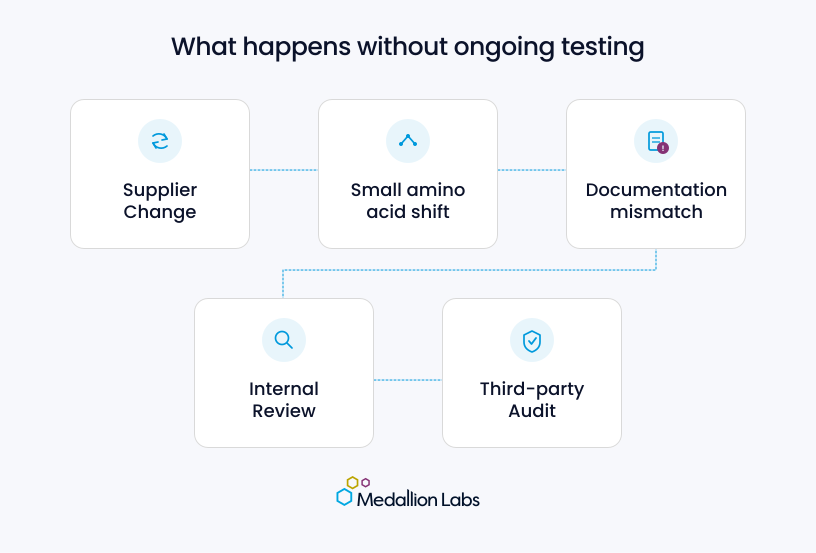
A mid-sized food manufacturer launches a high-protein snack positioned around its nutritional profile. Prior to launch, the product undergoes protein content testing and amino acid profiling to support labeling and internal quality documentation. The results meet requirements, and the product enters the market with confidence in its protein claims.
Over the next year, the product scales from pilot production to full commercial volumes. To manage supply continuity, procurement adds a second approved supplier for the primary protein ingredient. Around the same time, the operations team makes a modest processing adjustment to improve throughput during peak demand. Neither change is expected to affect nutrition, and no additional protein quality testing is scheduled.
Eighteen months after launch, the regulatory team initiates a routine documentation review ahead of a packaging update. As part of that process, an updated amino acid profile test is run to confirm alignment with the original validation data.
The new results show a consistent but relatively small shift in amino acid composition compared to the original baseline. Total protein content remains within specification, but one essential amino acid now trends lower across multiple production batches. While the difference does not materially change the product’s nutritional value, it creates a discrepancy between current data and the documentation supporting existing protein claims.
Because the product is already widely distributed, the discrepancy triggers a deeper internal review and a third-party audit to assess whether labeling remains fully substantiated. The audit requires additional testing across multiple lots, coordination across regulatory, quality, procurement, and operations teams, and external consulting support. The cost and effort are significant relative to the size of the original variation.
With ongoing protein quality monitoring in place, this type of drift can be identified earlier, when supplier changes or process adjustments are first introduced. Regular testing provides visibility into gradual shifts in amino acid composition and digestibility, helping teams address small issues before they escalate into audits, documentation gaps, or costly corrective actions.
PDCAAS in the Context of Changing Nutrition and Consumer Expectations
Consumer awareness around nutrition has increased substantially, particularly in categories such as alternative proteins, fortified foods, sports nutrition, and functional products. While most consumers do not evaluate PDCAAS scores directly, increased scrutiny of protein claims often translates into downstream regulatory, reputational, and commercial pressure.
Claims that attract attention are more likely to be questioned, audited, or challenged. As a result, food companies are increasingly expected to demonstrate transparency, accuracy, and consistency in how protein claims are substantiated.
In parallel with increased attention to protein claims, nutrition research has increasingly focused on amino acid composition, not just total protein intake. Areas such as healthy aging, metabolic health, and clinical nutrition have explored how specific amino acids contribute to physiological processes, even as conclusions continue to evolve.

Did You Know?
While this research does not translate directly into consumer-facing claims, it contributes to a broader environment in which protein quality and amino acid composition receive greater scrutiny. As a result, food companies are increasingly expected to understand and document not only how much protein a product contains, but how that protein is composed and how consistently it performs over time.
Protein quality testing provides a data-driven foundation for responding to these expectations. Rather than relying on assumptions or historical precedent, companies can reference documented testing results that support both internal decision-making and external communication.
In Vitro vs In Vivo Protein Quality Testing
Protein quality can be evaluated using both in vivo and in vitro testing approaches. Each method has distinct characteristics that influence when and how it is used.
In Vivo Protein Quality Testing
In vivo testing evaluates protein digestibility and amino acid utilization using live animal models. Historically, this approach has been used to assess protein quality under biological conditions that more closely approximate human digestion.
Characteristics of in vivo testing include:

Longer study timelines

Higher cost per test

Ethical and logistical constraints

Limited scalability for repeat or comparative testing
While the FDA (21 CFR 101.9) and Health Canada require final label claims, such as 'Excellent Source of Protein', to be substantiated by in-vivo bioassays, the $10,000+ price tag and 12-to-16-week lead times make animal testing impractical for iterative R&D. These constraints turn routine supplier screening or pilot-scale formulation trials into significant budget and timeline bottlenecks. In contrast, in vitro testing allows teams to validate nutritional quality in a fraction of the time and cost before committing to a final regulatory filing.
In Vitro Protein Quality Testing
In vitro protein quality testing simulates digestion and amino acid availability using laboratory-based methods rather than live models.
Characteristics include:

Faster turnaround times

Lower cost per test

Greater scalability

Suitability for screening, comparison, and ongoing monitoring
Decision Matrix: In-Vivo vs. In-Vitro
Use this table to determine which testing phase aligns with your current project goals.
| In-Vivo PDCAAS (Animal Study) | In-Vitro PDCAAS (Laboratory Simulation) | |
| Primary Use Case | Final FDA Label Substantiation | R&D, Formulation, Ingredient Screening |
| Typical Cost | $10,000 – $15,000+ | ~$1,500 – $2,000 |
| Turnaround Time | 3–6 Months | 2–3 Weeks |
| Methodology | Rat feeding study | Enzymatic/Chemical "Test Tube" Simulation |
| Accuracy | Regulatory Gold Standard | High correlation with in-vivo results |
| Best For... | The final "locked" formulation before printing 50,000 units of packaging. | Comparing 5 different pea-protein suppliers or checking if a heat-process damaged your protein. |
The "Pre-Flight" Strategy: Why In Vitro PDCAAS is the Industry Standard for R&D
For food and ingredient companies, protein quality is moving target. Because amino acid profiles and digestibility can shift with every new supplier or processing tweak, waiting months for animal-based data is often too slow and expensive for innovation.
For most development phases, in vitro PDCAAS testing provides the most practical balance of speed, cost, and decision-ready insight.
When to Choose In Vitro Testing
Because in vitro testing is highly repeatable and accessible, it enables trend analysis rather than just a one-time validation. It is the preferred method for:
- Early-Stage Formulation: Identifying if a plant-based blend meets nutritional targets before the recipe is locked
- Ingredient Screening: Comparing three different suppliers of pea protein to see which offers the highest digestibility
- Reformulation & Substitution: Validating that a cost-saving ingredient swap won’t compromise your existing protein claims
- Ongoing Monitoring: Detecting "nutritional drift" across production runs to ensure long-term consistency
Using In Vitro PDCAAS to Reduce Risk in the Final In Vivo Study
While in vitro testing is the primary tool for R&D, in vivo studies remain the regulatory standard required by the FDA and Health Canada for final label claim substantiation. However, sending a product straight to an in vivo study without preliminary data is a high-risk decision.
Without a "Pre-Flight" check using in vitro methods, brands often face:
- Lost Claims: Discovering a score is too low to support an "Excellent Source" claim only after the packaging is designed.
- Sunk Costs: Spending $10,000–$15,000 on a 12-week study that proves the product needs to be reformulated anyway.
- Launch Delays: Restarting the 12-to-16-week in vivo study cycle after an unexpected result can push a product launch back by months, missing critical retail windows or seasonal opportunities.
By integrating in vitro testing early, you ensure that when you are ready to commit the time and budget to an in vivo study, you already have data-backed certainty that you will pass.
No single test provides a complete picture of nutritional integrity. In practice, regulatory and R&D teams use a "layered" approach, combining multiple analytical methods to satisfy different business needs across the product lifecycle.
Why an Accurate PDCAAS Requires a Complete Essential Amino Acid Profile
To calculate an accurate PDCAAS, food testing and analysis laboratories perform a complete Essential Amino Acid profile. This requires three distinct analytical steps to ensure no building blocks are missed:
Acid Hydrolysis:
Measures 15 standard amino acids (e.g., Lysine, Leucine).
Base Hydrolysis:
Specifically captures Tryptophan, which is otherwise lost during acid testing.
Performic Acid Oxidation:
Accurately quantifies sulfur-containing amino acids (Cystine and Methionine).
By combining these, protein testing labs ensure your PDCAAS score is based on 100% of the relevant nutritional data.
Medallion Labs’ Food Testing Services to Measure Protein Content
| Test Type | What It Measures | Typical Use |
| In Vitro PDCAAS Protein Quality Test | Amino acid profile combined with in vitro digestibility to approximate overall protein quality | Screening protein sources, comparing ingredients, monitoring protein quality trends, supporting formulation and reformulation decisions |
| Amino Acid Profile Test (Acid Hydrolysis) | Majority of amino acids present in a protein after acid hydrolysis | Evaluating protein completeness, identifying limiting amino acids, supporting PDCAAS calculations, comparing protein ingredients or suppliers |
| Amino Acid Profile Test (Base Hydrolysis – Tryptophan) | Tryptophan content, which degrades under acid hydrolysis | Completing essential amino acid profiles and improving accuracy of protein quality assessment |
| Hydroxyproline (Collagen) Test | Hydroxyproline content used to estimate collagen | Differentiating collagen-based proteins, supporting formulation or labeling decisions involving collagen |
| Performic Acid Oxidation Amino Acids (Cystine and Methionine) | Sulfur-containing essential amino acids | Completing essential amino acid profiles, supporting PDCAAS calculations, assessing sulfur-limited proteins |
| Physiologically Free Amino Acids (With or Without Tryptophan) | Amino acids not bound into intact protein structures | Evaluating fermentation, enzymatic processing, protein breakdown, or amino acid availability independent of intact proteins |
| Protein Content Test (Dumas Method) | Total or crude protein content based on nitrogen measurement | Nutrition labeling, quality control, and verification of protein content specifications |
How These Protein and Amino Acid Tests Work Together
No single test provides a complete picture of protein quality. In practice, food and ingredient companies combine multiple analytical methods to answer different questions at different stages of the product lifecycle.
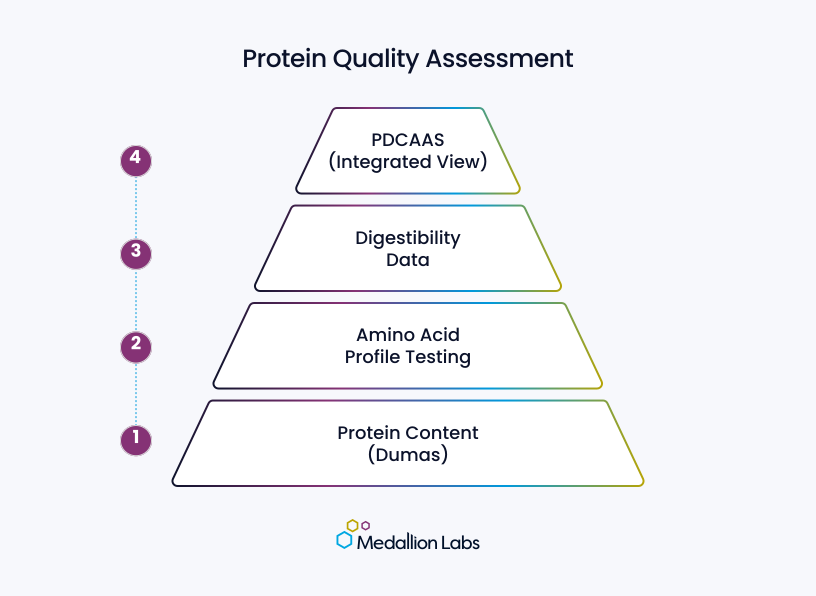
Protein content testing establishes how much protein is present and supports labeling requirements. Amino acid profile testing reveals how that protein is composed and whether essential amino acids are present in sufficient proportions. Digestibility data, combined with amino acid composition, supports PDCAAS protein quality assessment.
In vitro PDCAAS testing brings these elements together by integrating amino acid profile data with digestibility to provide an approximation of protein quality that supports formulation, comparison, and monitoring decisions.
Used together, these tests allow food companies to:
- Evaluate protein quality during formulation
- Monitor consistency across suppliers and production runs
- Assess the impact of processing and reformulation
- Support regulatory documentation with defensible data
- Reduce risk across scale-up and commercialization
This layered approach reflects how protein quality is managed in real-world food systems: not through a single measurement, but through coordinated testing that aligns science, compliance, and business needs.
How You Can Integrate Protein Quality Testing into the Product Lifecycle

PDCAAS protein quality testing is most effective when it is applied as part of a broader, decision-oriented protein quality strategy rather than treated as a standalone metric. When evaluating how and when to use PDCAAS, food and ingredient companies should consider the specific role protein quality plays within their products and how that role may evolve over time.
Key Takeaways
- Quality vs. Quantity: PDCAAS is a quality multiplier (0.0–1.0), not a mass measurement. You must pair it with a Dumas Nitrogen test to calculate the final % Daily Value (%DV) for your label.
- The "Pre-Flight" Strategy: Use in vitro testing during R&D to identify nutritional gaps early. This avoids the high cost and 12-week delay of an in vivo study on a formulation that isn't ready.
- Preventing Nutritional Drift: Protein quality changes over time. Ingredient substitutions, supplier shifts, and processing tweaks (like high heat) can invalidate your claims if not monitored.
- Mandatory Amino Acid Precision: A defensible PDCAAS requires a full profile. Specialized testing for Tryptophan and Sulfur Amino Acids is essential to avoid inaccurate scores that won't survive a regulatory audit.
- Risk Mitigation: Integrating protein quality data early ensures that when you commit to final validation, you have data-backed certainty that your product meets its targeted claim substantiation thresholds.
Used thoughtfully and in context, PDCAAS remains a valuable tool for supporting informed, defensible decision-making across the product lifecycle. When combined with complementary protein and amino acid testing, it helps food companies manage nutritional risk, maintain regulatory alignment, and make clearer choices as products move from development to commercialization and beyond.
Learn more about PDCAAS protein quality testing and related analytical methods that meet your team’s needs or contact us to get started today.